Greyhound racing is one of the most overlooked disciplines in sports betting — and for sharp bettors willing to put in a little groundwork, that relative neglect is precisely where the opportunity lies.
Why Greyhound Racing Deserves More Attention
The dogs run almost every evening across UK tracks, generating a constant stream of betting markets. Unlike horse racing, where form can be clouded by jockey tactics, weight allowances and going changes, greyhound racing strips the puzzle back to a few core variables: the trap draw, a dog's running style, its sectional times and the condition of the track. Master those and you have a genuine framework for spotting value — rather than just picking names you like.
With the autumn season well underway in September 2026 — fixtures packed across the likes of weekend graded competitions and mid-week opens — there's rarely a shortage of races to analyse.
Understanding Trap Bias
The trap number a greyhound is drawn in has a significant influence on its chances, and this effect varies considerably from track to track.
How Bias Works
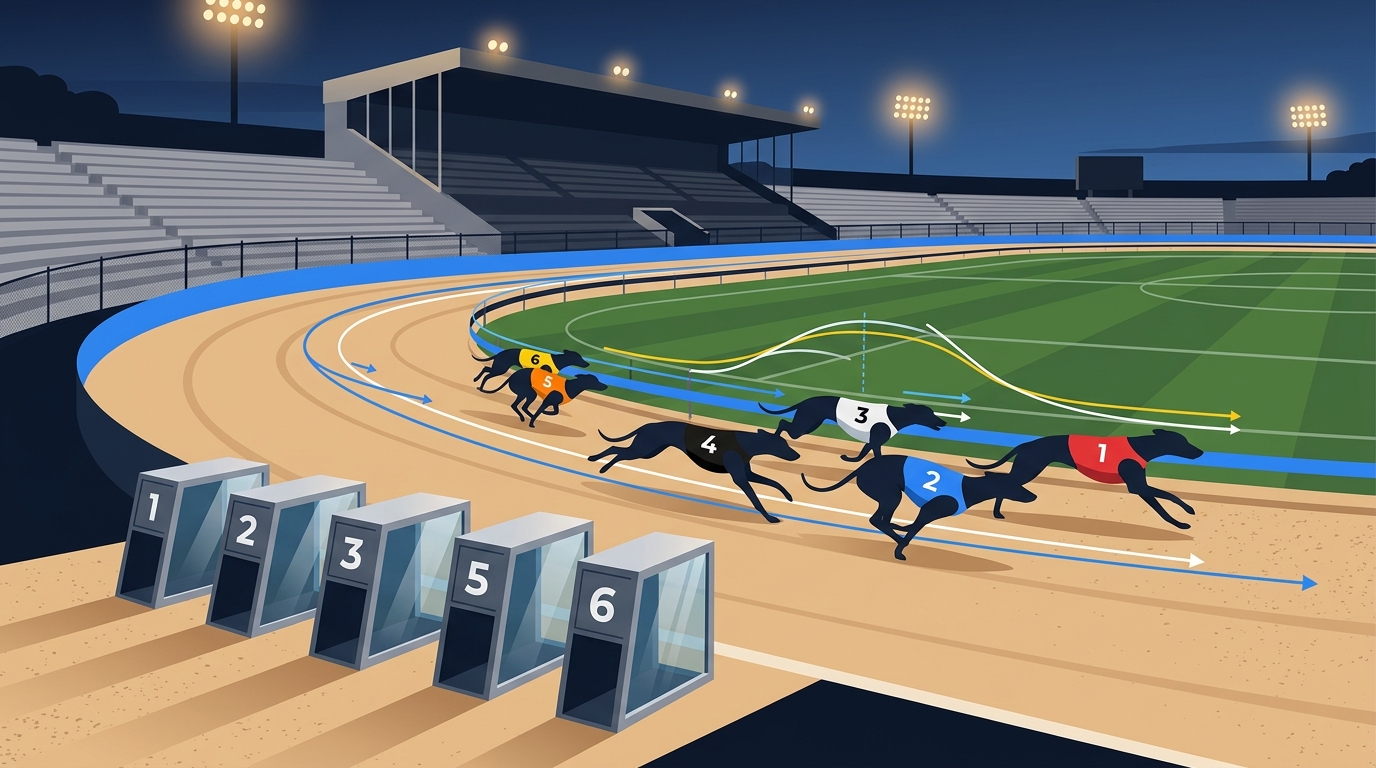
Most greyhound tracks in the UK are oval circuits with a slight camber on the bends. Dogs drawn in low traps (1 and 2) have a shorter path to the first bend, which suits early pacers who want to lead. Dogs drawn wide (traps 5 and 6) face a longer initial run but can avoid the first-bend scrimmage that often bunches the field.
- Trap 1 and 2 — typically favoured at tracks with tight first bends; strong advantage for railers.
- Trap 3 and 4 — a mixed bag; these dogs often get squeezed on the turn unless they break fast.
- Trap 5 and 6 — suits wide runners who can bowl around the outside; the disadvantage narrows at tracks with sweeping bends.
Doing Your Trap Research
Every serious greyhound punter should familiarise themselves with a track's historical trap statistics. Free form databases publish split-win percentages by trap at each venue. Look for traps that are significantly over- or underperforming their expected one-in-six share — those anomalies can persist for months because track geometry doesn't change overnight.
Be cautious, though. A strong trap-one record at a particular track doesn't mean every trap-one dog is a bet. The key is whether the market has already priced that advantage in.
Running Style: The Most Underused Variable
Once you understand trap bias, the next step is matching each dog's running style to the conditions it faces.
Greyhounds broadly fall into three categories:
- Early pacers (or railers) — dogs that explode from the traps and try to lead from the front. They thrive when drawn low and when the field is light on other early pacers.
- Mid-division runners — dogs that settle just off the pace and pick up on the back straight. Consistent but rarely dominant unless they have a clear run.
- Finishers (or wide runners) — dogs that come from behind and rely on a gap appearing in the straight. Their chance rises dramatically when the early pace is strong and the field bunches.
Reading a Race Shape
Before placing a bet, build a quick mental picture of the race: count how many early pacers are in the field. If traps 1, 2 and 3 all hold front-runners, expect a scrappy first bend — which creates a golden opportunity for a genuine finisher drawn wide to come through late. If only one dog wants to lead, that dog's odds may be worth a second look even if it's drifted in the market.
This kind of race-reading is exactly the analytical process that differentiates structured betting from a casual flutter.
Sectional Times and What They Tell You
Sectional times — splits recorded at key points around the circuit, typically the first bend and the back straight — are the greyhound equivalent of horse racing's pace figures.
A dog that posts consistently fast first-bend splits but finishes modestly may be burning itself out in traffic. A dog that records slow early splits but strong back-straight splits might be a latent finisher waiting for an easier lead scenario. Cross-reference sectionals with trap draws and running styles and you start building a much richer picture than the bare finishing positions suggest.
Finding Value in the Market
Value, as always, is the central concept. A dog doesn't have to win to represent a good bet — it simply has to win more often than its odds imply.
The greyhound market is thinner and less efficient than Premier League football or major horse racing, particularly in the lower graded races and in early-evening cards that attract less volume. Bookmaker margins still exist, so shop around for best odds — and consider exchanges, where you can often trade out or lay dogs showing obvious trap-draw disadvantages.
If you're looking for structured guidance from people who specialise in greyhound markets, our tipster directory lists vetted greyhound tipsters with independently tracked records, so you can compare verified performance rather than taking marketing claims at face value. For broader betting fundamentals — including how to manage a staking plan — the TipsterCheck betting guides hub is a solid starting point.
Practical Checklist Before You Bet
- Check the trap-win statistics for the specific track.
- Identify each dog's running style from recent form replays or sectionals.
- Map out the likely race shape — how many early pacers? Where are they drawn?
- Compare your assessment of each dog's probability with its market price.
- Only bet when you find a genuine discrepancy — patience is not optional.
Responsible Gambling
Greyhound betting should be enjoyable, not stressful — always bet only what you can comfortably afford to lose. No tipster or strategy can guarantee profit, and anyone who tells you otherwise is not being straight with you. If you're concerned about your gambling habits, visit BeGambleAware.org for free, confidential support.