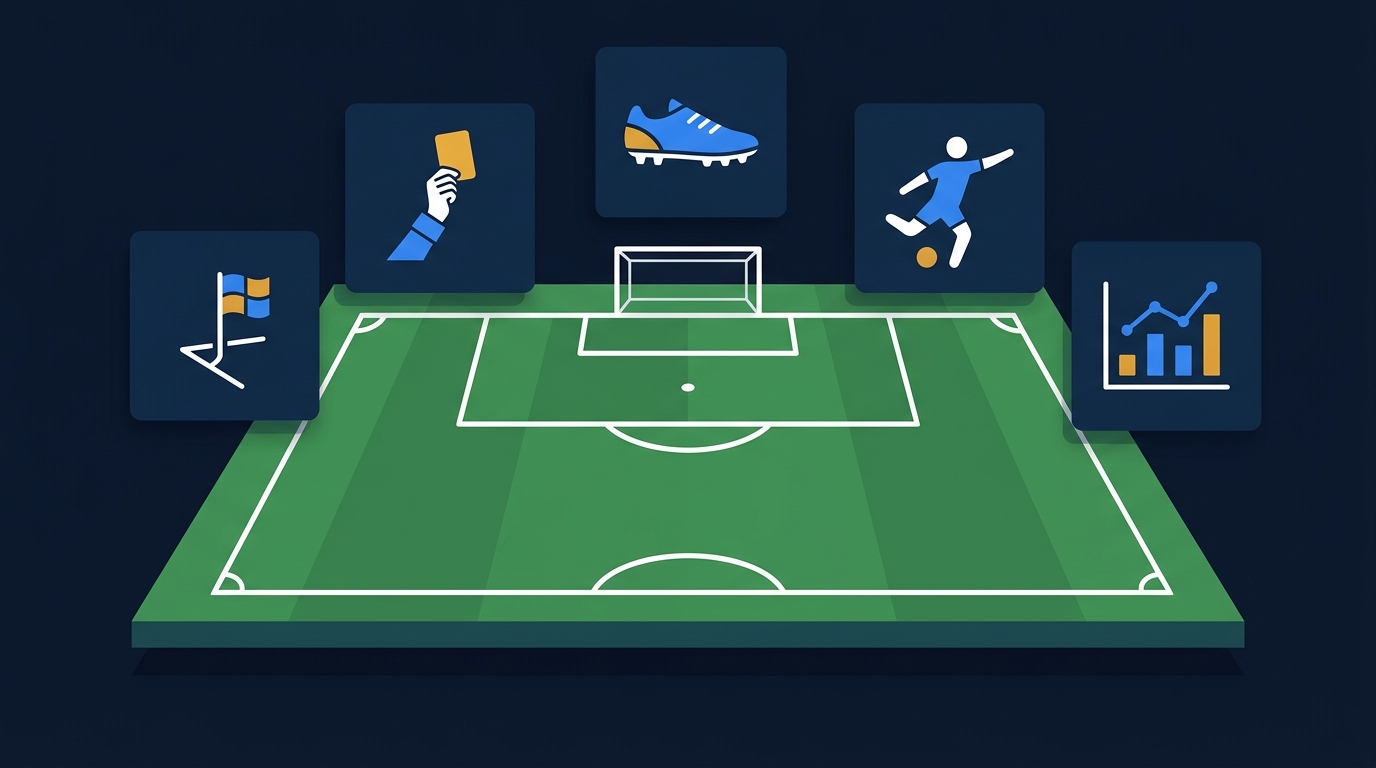
Most bettors spend their entire football-betting lives on the 1X2 market, but some of the most interesting — and exploitable — value sits in the markets the casual punter never even clicks on.
Why Look Beyond the Match Result?
The win-draw-win market attracts the most money, which means bookmakers price it most carefully. Sharper bettors know that heavily traded markets are also the hardest to beat consistently. Peripheral markets — corners, cards, and player props — tend to receive less attention from bookmaker traders, which can create pricing inefficiencies for those willing to do their homework.
This doesn't mean these markets are easy money. It means they reward research and a structured approach more generously than simply picking a winner.
Corner Markets
How They Work
Corner betting is typically offered in two forms:
- Total corners (over/under) — will there be more or fewer than a set number of corners in the match?
- Corner handicap — similar to the Asian handicap for goals, applied to corners between the two teams
- First/last corner — which team takes the first or final corner of the match
- Race to X corners — which side reaches a set number of corners first
What to Research
Corners are heavily influenced by team style and tactical setup. A deep-sitting, counter-attacking side playing at home will produce a very different corner count to an expansive, possession-heavy team. Before betting corners, ask yourself:
- How many corners does each team average per game, both home and away?
- Does the opposition's defending style invite wide play?
- Is one side expected to chase the game (which drives corner counts up late on)?
- What's the referee's typical match tempo — does the game flow, or does it fragment?
Mid-season form, which we're deep into right now with domestic leagues in full swing, is a good time to build reliable corner averages based on meaningful sample sizes.
Card Markets
Types of Booking Bets
- Total bookings (over/under) — often priced with 10 points for a yellow, 25 for a red
- Player to be booked — a specific player receiving at least one yellow card
- First booking — which player or team receives the first card
- Both teams to have a player sent off — rare and high-odds
The Variables That Matter
Card markets are driven by referee tendency more than almost any other factor. Bookmakers adjust their lines based on the appointed official, and so should you. A referee who averages eight or nine bookings per match changes the whole complexion of an over/under line compared with one who lets the game flow.
Other useful angles:
- Rivalry and historical needle — certain fixtures carry more edge and aggression regardless of the referee
- Relegation/promotion pressure — teams fighting for their lives tend to commit more tactical fouls
- Player suspension risk — a player on a yellow-card tightrope may be more cautious, while a reckless midfielder in poor form might be worth siding against
If you want a structured way to evaluate tipsters who specialise in these markets, the TipsterCheck tipster directory lets you filter by market type so you can see verified track records rather than taking anyone's word for it.
Player Prop Markets
What Are Player Props?
Player prop (or player proposition) bets focus on individual performance rather than the team result. In football, common props include:
- Anytime goalscorer / first goalscorer
- Player to have a shot on target
- Player to make X or more tackles
- Player to be carded (covered above, but also counted as a prop)
- Goalkeeper to make X saves
Approaching Props Intelligently
Player props require you to think at the individual level, not just the team level. A striker might look attractive at odds to score, but if his club is set up to dominate possession in a low-block defensive shape, chances could be scarce regardless of his quality.
Key research habits for player props:
- Check likely starting XIs — injury news and rotation patterns matter enormously; a prop bet on a player who doesn't start is a write-off
- Look at matchup specifics — a winger facing a poor defensive full-back is a different proposition to one facing a disciplined, experienced defender
- Consider game state likelihood — if a team is expected to win comfortably, they may substitute key players early, cutting short a striker's time on the pitch
- Use data wisely — shot maps, chance creation stats and pressing metrics are freely available and give you an edge over gut-feel punters
For those new to building a structured betting approach, our betting guides hub covers everything from bankroll management to understanding value, which applies just as much to props as it does to traditional markets.
Putting It All Together
The appeal of corners, cards and player props isn't that they're softer markets to beat — it's that they require a different kind of thinking. Bettors who take the time to understand the tactical, stylistic and situational factors driving these markets can build a genuinely differentiated edge.
As with any betting market, consistency and record-keeping matter. Track every bet, review what you got right and wrong, and treat it as a long-term process rather than a quick fix.
Responsible Gambling
Always bet only what you can comfortably afford to lose, and remember that no tipster or betting strategy can guarantee a profit. If you're concerned about your gambling habits, visit BeGambleAware.org for free, confidential support.