If you've ever stared at a odds column and felt none the wiser, you're in good company — understanding what those numbers actually mean is the single most useful skill any bettor can develop.
Why Odds Matter More Than You Think
Odds aren't just a way of displaying a potential payout. They're a bookmaker's expression of probability — and learning to read them critically is what separates informed bettors from those who are simply guessing. With the Premier League season in full swing and the Champions League reaching its group-stage climax this October, there's never been a better time to get to grips with the basics.
Let's break it all down.
Fractional Odds: The Traditional British Format
Fractional odds are the format most traditional UK bettors grew up with. You'll still see them on racecourses and in many high-street bookmakers, displayed as two numbers separated by a slash — for example, 5/1 or 7/2.
How to read them
The formula is straightforward:
- The number on the left (numerator) is how much you win
- The number on the right (denominator) is how much you stake
So with odds of 5/1, a £10 stake returns £50 profit, plus your £10 stake back — a total return of £60.
With 7/2, a £10 stake wins you £35 in profit (7 ÷ 2 = 3.5, multiplied by £10), plus your stake back.
Odds-on vs odds-against
When the left number is smaller than the right — like 1/2 — the selection is described as "odds-on". This means you're staking more than you stand to win. Odds-on favourites are considered likely to win, but the reward is proportionally smaller.
Decimal Odds: The Modern Standard
Decimal odds have become the dominant format at most online bookmakers, and it's easy to see why — they're simpler to work with, especially when comparing markets.
A decimal odd represents your total return per £1 staked, including your stake.
How to read them
- 2.00 = evens (you double your money)
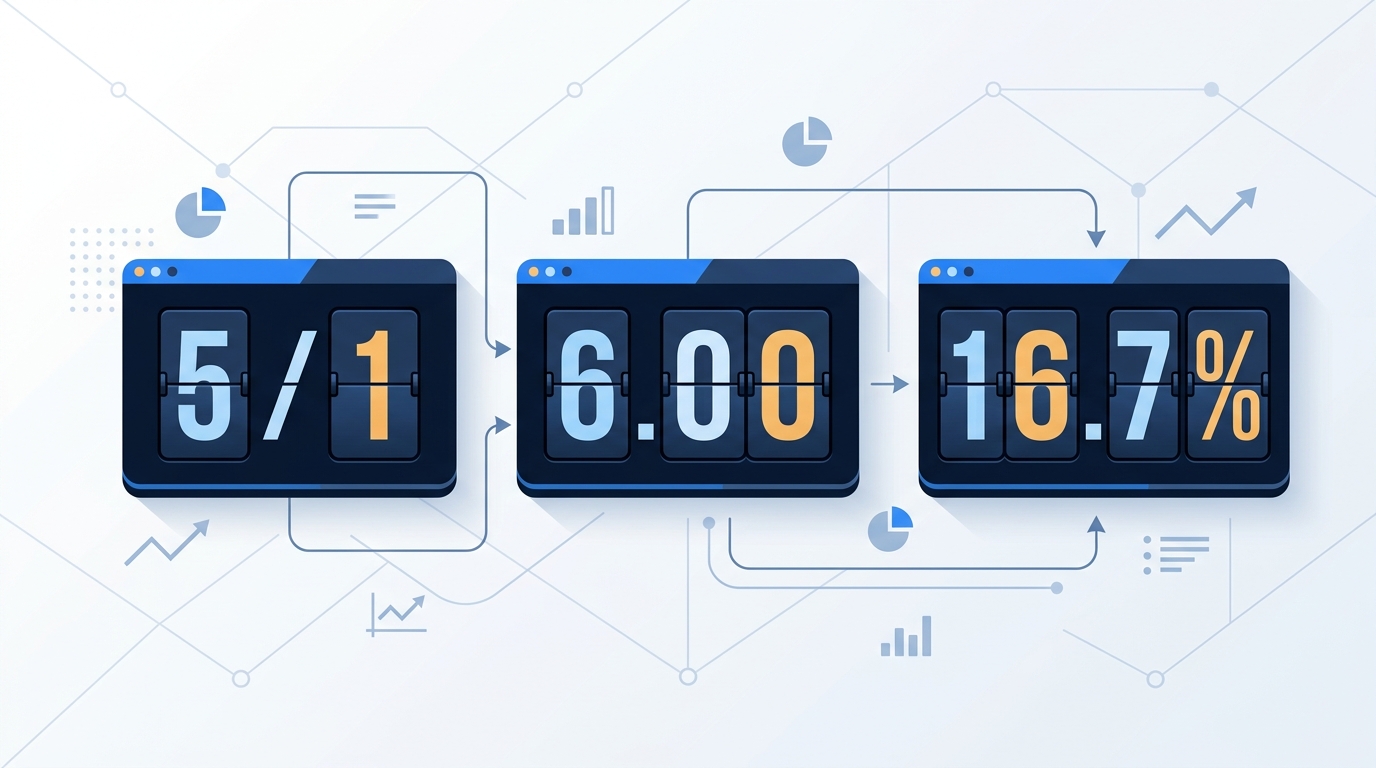
- 6.00 = 5/1 in fractional terms
- 1.50 = 1/2, odds-on
To calculate your total return: stake × decimal odds = total return
For example, a £20 bet at 3.50 returns £70 in total (£50 profit + £20 stake).
To convert fractional to decimal, simply divide the numerator by the denominator and add 1:
5/1 → (5 ÷ 1) + 1 = 6.00
Most betting sites let you toggle between formats in your account settings if you have a strong preference.
Implied Probability: The Number Behind the Number
This is where things get genuinely useful. Every set of odds implies a probability that a given outcome will occur. Understanding this lets you judge whether a price represents good value.
Calculating implied probability
From decimal odds:
Implied probability (%) = (1 ÷ decimal odds) × 100
So odds of 4.00 imply a 25% chance of that outcome occurring (1 ÷ 4 × 100).
From fractional odds:
Implied probability (%) = denominator ÷ (denominator + numerator) × 100
For 5/1: 1 ÷ (1 + 5) × 100 = 16.7%
The overround: the bookmaker's built-in edge
If you add up the implied probabilities for every outcome in a market, you'll almost never reach exactly 100%. You'll typically land somewhere between 105% and 115%. That excess is called the overround (or "vig"), and it's how bookmakers build in their profit margin.
A lower overround means better value for bettors. This is one reason why comparing odds across multiple bookmakers — and understanding what the "true" probability of an outcome might be — matters so much.
Putting It Into Practice
Knowing how to convert and interpret odds is genuinely empowering, but it's just the starting point. The real question is whether a bookmaker's implied probability matches your own assessment of likelihood.
If you believe a team has a 40% chance of winning, but the odds imply only a 30% chance, that's a potential value bet. If the odds imply a 60% chance for something you think is a coin flip, you might want to look elsewhere — or pass entirely.
For a deeper dive into concepts like value betting, staking plans and how to evaluate a tipster's track record, head over to our betting guides hub — it covers everything from beginner basics to more advanced strategies.
And if you're looking to follow a professional tipster rather than going it alone, our tipster directory lets you browse independently reviewed services so you can make an informed choice.
A Quick Reference: Odds Conversion Table
| Fractional | Decimal | Implied Probability |
|---|---|---|
| 1/2 | 1.50 | 66.7% |
| Evens (1/1) | 2.00 | 50.0% |
| 2/1 | 3.00 | 33.3% |
| 5/1 | 6.00 | 16.7% |
| 10/1 | 11.00 | 9.1% |
Responsible Gambling
Betting should always be enjoyable and within your means — never stake money you can't afford to lose, and remember that no tipster or system can guarantee a profit. If you're concerned about your gambling habits, visit BeGambleAware.org for free, confidential support.