Most punters glance at the odds, place their bet, and move on — but understanding what those numbers actually mean is one of the most valuable skills you can build as a bettor.
Why Odds Matter More Than You Think
Odds aren't just a way of expressing how much you might win. They're a bookmaker's way of reflecting probability — or, more precisely, their opinion of probability, adjusted to include a profit margin. Once you understand the mechanics behind them, you stop simply accepting the price on offer and start evaluating whether it represents genuine value.
With the new Premier League season now in full swing and the racing calendar packed through August, there's no better time to sharpen up your understanding before the autumn fixtures pile in.
Fractional Odds: The Traditional British Format
Fractional odds are what most UK bettors grew up with, and you'll still see them prominently displayed at racecourses and in high-street bookmakers.
How to Read Them
The format is simple: the left number tells you how much profit you'd make for every right-hand number you stake.
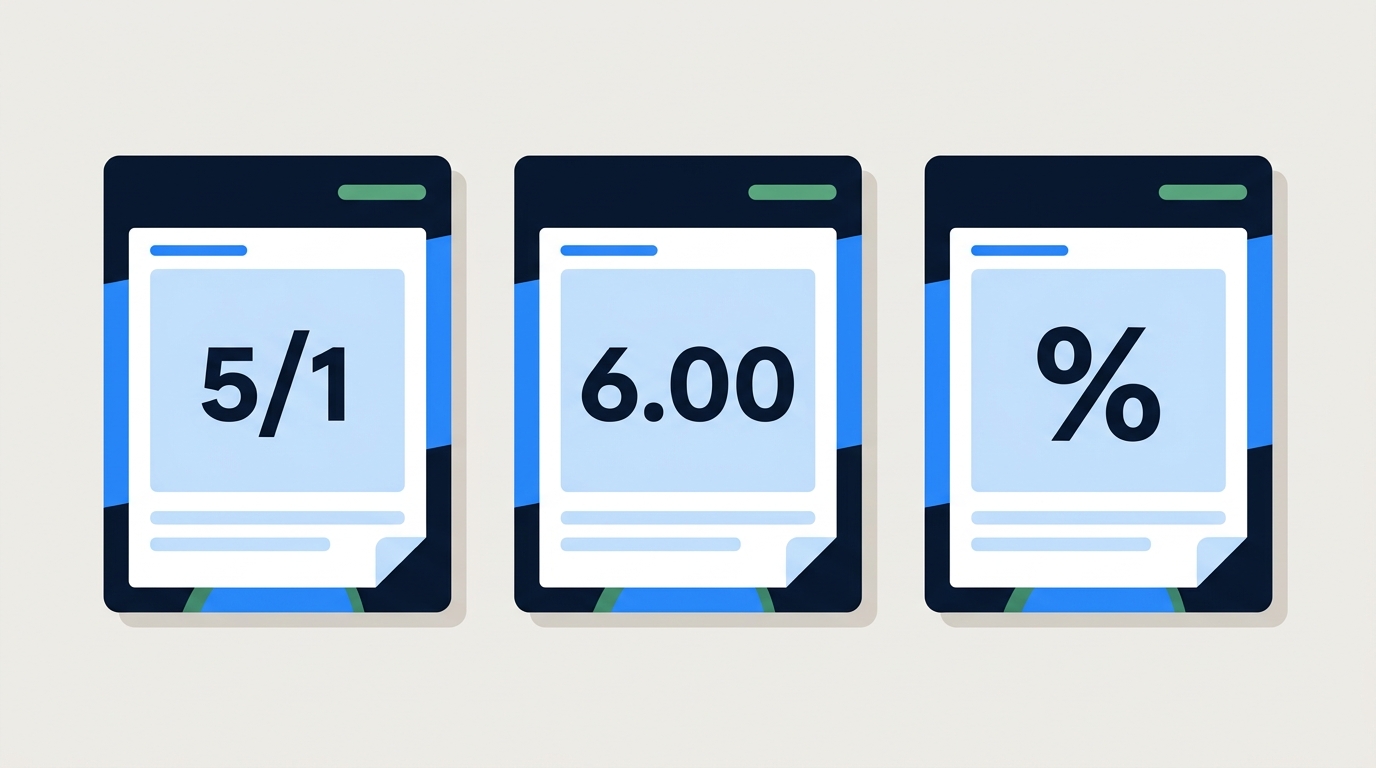
- 5/1 ("five-to-one") — stake £1, win £5 profit (plus your £1 stake back = £6 total return)
- 2/1 ("two-to-one") — stake £1, win £2 profit (£3 total return)
- 1/2 ("one-to-two", an odds-on price) — stake £2, win £1 profit (£3 total return)
When the right-hand number is larger than the left (e.g. 1/2, 2/5), the selection is "odds-on" — meaning the bookmaker thinks it's more likely to win than not.
The Calculation
To work out your total return from fractional odds:
Total return = (Stake × Numerator / Denominator) + Stake
So a £10 bet at 7/2: (10 × 7 / 2) + 10 = £35 + £10 = £45 total return.
Decimal Odds: The Modern Standard
Decimal odds have become the default format on most online betting exchanges and many bookmaker websites — and for good reason. They're easier to calculate and make comparing prices across platforms much more straightforward.
How to Read Them
The decimal number represents your total return per £1 staked, including your stake back.
- 6.00 — the fractional equivalent of 5/1
- 3.00 — equivalent to 2/1
- 1.50 — equivalent to 1/2
The Calculation
Total return = Stake × Decimal Odds
A £10 bet at 4.50: 10 × 4.50 = £45 total return (£35 profit + £10 stake).
Decimal odds also make it instantly obvious which price is better. Is 15/8 better than 1.90? Convert 15/8 to decimal: (15/8) + 1 = 2.875. Yes — significantly better.
Implied Probability: The Number Behind the Number
This is where things get genuinely useful. Every set of odds contains an implied probability — the bookmaker's estimate of how likely an outcome is to occur. Learning to convert odds to probability lets you judge whether a price is fair or overpriced.
Converting to Implied Probability
From decimal odds:
Implied probability (%) = (1 / Decimal Odds) × 100
- Odds of 2.00 → 1/2.00 × 100 = 50%
- Odds of 4.00 → 1/4.00 × 100 = 25%
- Odds of 1.50 → 1/1.50 × 100 = 66.7%
From fractional odds:
Implied probability (%) = Denominator / (Denominator + Numerator) × 100
- 5/1 → 1 / (1+5) × 100 = 16.7%
- 2/1 → 1 / (1+2) × 100 = 33.3%
The Overround: How Bookmakers Build in Their Margin
Here's the important bit. If you add up the implied probabilities for every outcome in a market, the total will always exceed 100%. This excess is called the overround (sometimes "vig" or "juice"), and it's the bookmaker's built-in profit margin.
In a perfectly fair coin-toss market, each side would be 2.00 (50% + 50% = 100%). A bookmaker might price it at 1.91 each side — that's roughly 52.4% + 52.4% = 104.8%. The extra 4.8% is their edge.
Understanding this is why sharp bettors are always looking for value — situations where they believe the true probability of an outcome is higher than the implied probability in the odds.
Putting It Together: A Practical Mindset
Knowing your formats and implied probabilities won't guarantee profits, but it changes how you approach every bet:
- Always convert to decimal for easy cross-platform comparison
- Calculate the implied probability and ask yourself: "Do I genuinely think this is more likely than the bookmaker suggests?"
- Be aware of the overround — markets with higher overrounds eat into your returns faster
- Shop around for the best price — even small differences in odds compound significantly over time
If you want to dig deeper into staking strategies, value betting and reading form, our betting guides hub covers all of this in detail.
And if you're considering following a tipster to help identify value bets, browse the TipsterCheck tipster directory — where every listing includes independently verified track records so you can make an informed decision.
Responsible Gambling
Betting should always be approached as entertainment, not a source of income — bet only what you can comfortably afford to lose, and remember that no tipster or system can guarantee a profit. If you're concerned about your gambling, visit BeGambleAware.org for free, confidential support.